“Peer Trainers show students that you can live a good, enjoyable, fulfilling life. A meaningful life”
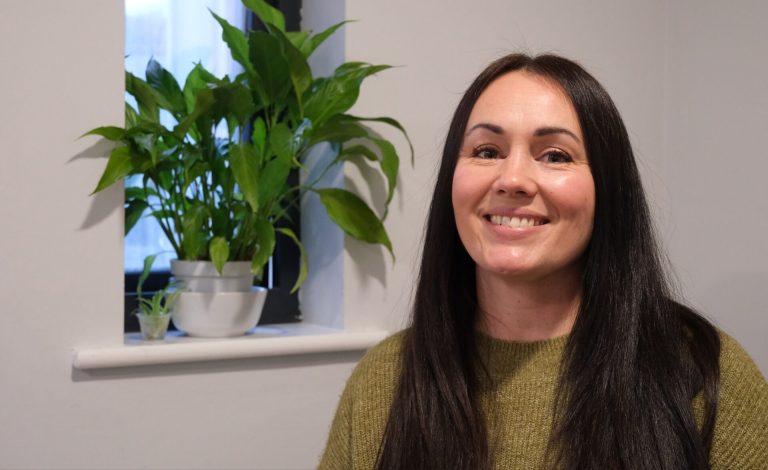
Meet Vicky, one of our Peer Trainers at Brighton and Hove Recovery College.
I’m a Peer Trainer for the Brighton and Hove Recovery College.
I co-produce and co-deliver courses with Clinicians and Peer Trainers on mental health difficulties and how to cope with them, sharing strategies to help students manage their conditions.
I’ve been doing that for four years since Southdown first ran the Recovery College. I felt honoured to be asked to join the team as a Peer Trainer.
A Peer Trainer is someone with a teaching qualification who has lived experience of a mental health condition. There’s a team of about 15 of us.
I’m a skilled trainer and I bring my previous professional experience to this role as well as my lived experience.
The biggest thing students feedback on is the value of having a trainer teach from their own lived experience about a particular condition. Sharing our experiences, our stories, and coping strategies is fundamental. We can really understand and empathise with the students. We know what it’s like because we’ve been there.
I’ve got 20 years’ experience of suffering and managing mental health distress and have used many services in the community.
Peer Trainers show students that you can live a good, enjoyable, fulfilling life. A meaningful life. That you can get to that stage with time, hard work, and good input from services.
This term I’m teaching a workshop on Pain Management, a course called Exploring Relaxation, and the Recovery College’s most popular course, Anxiety Management. That one’s always over-subscribed.
I used a lot of my background in physiotherapy to design the course on Anxiety Management. A lot of students find it helpful that I link the science with the symptoms and the techniques – it gives them more understanding of what’s going on in the body and greater confidence in the techniques I teach.
The recovery-focused model that the Recovery College uses is much better than what I experienced when I was younger. It has changed the language we use from ‘patients’ to ‘students’, and moved it from a clinical to a learning environment.
I love the Recovery College and it’s our underlying ethos that makes it special. It’s peer-led and student-led. We have students as well as Peer Trainers, Clinicians, and Managers, who sit on the Steering Group that leads the direction of the college.
The recovery and the co-delivery models that we use underpin the entire college, creating equality. We’re all people together, sharing information and skills.
We were the first Recovery College to become members of the NUS, we support students to access our Open Days, and we have Buddies to assist students who might have trouble getting to college and need extra support in the classroom.
Sometimes just getting to college is an achievement for students and we do everything we can to support them to stay in college.
Moving from any service can be a difficult transition and I’ve designed a couple of courses around that. I want to encourage students to experience what it’s like to look ahead because there can be a lot of fear around the future. When you have an illness it can often be about managing in that present moment.
I want to help people explore who they are, what they want, what their passions are, what they might want to do, and where their life could go. I want to help them open the chink in the door to see where they might want to go. As someone who had a lot of challenges in my twenties, it was important for me to look at the future because I wasn’t ready for retirement.
Being a Peer Trainer has been great for my own progression in terms of confidence. I was probably quite anxious when I started here but that has improved greatly.
I did a lot of voluntary work before I came here which gave me the sense that I have a life outside of my health condition. I used to be fearful of paid work because of the potential pressure and expectation of a role. But the pressure was never there with the Recovery College because of the nature of the work, who we are, and our ability to create a flexible schedule as trainers.
It’s great to be part of a team here but also work as an autonomous practitioner. And it’s important to be in an equal partnership with the clinicians we work with – there’s no hierarchy.
It’s given me back my self-confidence and self-value. It’s made me feel good about myself and helped me accept what I can do. It’s boosted my own self-worth.
I want to continue working in mental health, supporting individuals to gain as much out of their lives as they can through clinical work and through group programmes.
More stories
Personal journeys from the people we support and our colleagues.