
Our approach to care and support
Good support is more than meeting needs.
It is about involving people in their own lives — and working alongside them, not just for them.
Working alongside you
Every person should be involved in their own life, whatever their support needs. Our role is to work alongside you, not simply to do things for you.
We start by learning who you are: what matters to you, what you enjoy, the people and routines that are important to you, how you communicate, what makes you feel safe, and what you want to work towards.
Taking an active part
We use active support and graded assistance.
This means creating real opportunities for you to take part and giving only the level of help you need.
Taking part might mean cooking a whole meal. It might also mean choosing the ingredients, holding a cup, pressing a switch, or showing enjoyment as water is poured. What matters is that you are included and have genuine influence over what happens.
Communication that works for you
Communication is more than speech.
We take time to understand how each person communicates and how they show choice, comfort, uncertainty, pain, enjoyment, or distress.
This may include words, signs, photographs, objects, communication aids, facial expression, movement, sound, or behaviour. Staff adapt their communication, give people time to respond, and check that they have understood.
Choice, control, and positive risk
We look for opportunities to offer meaningful choice and share decision-making.
We support people to try new things, build confidence, and take positive risks, while thinking carefully about safety.
The aim is not to remove every risk or make decisions on someone’s behalf. It is to help each person understand their options and have as much control as possible.
Skills, relationships, and belonging
A good life is about more than having support needs met.
We help people maintain relationships, follow their interests, learn skills, contribute, and be part of their community.
This may mean seeing family and friends, going to local places, joining activities, planning a holiday, volunteering, helping to train staff, or taking part in decisions about Southdown. The starting point is always what matters to the person, not a standard list of activities.
Skilled and reflective teams
Staff receive training and ongoing support in person-centred working, active support, facilitation skills, communication, health and safety, and positive behaviour support where this is relevant.
Teams use supervision, reflection, feedback, and learning to keep improving. We want staff to notice when they may be taking over, remain curious about what a person is communicating, and find better ways to include them.

Our values and The Southdown Beacon
Our values guide how we work and how we represent Southdown.
They shape our culture and define success beyond numbers. Every one at Southdown strive to be Force for good, Brilliant with people, United, Trustworthy and Responsive.
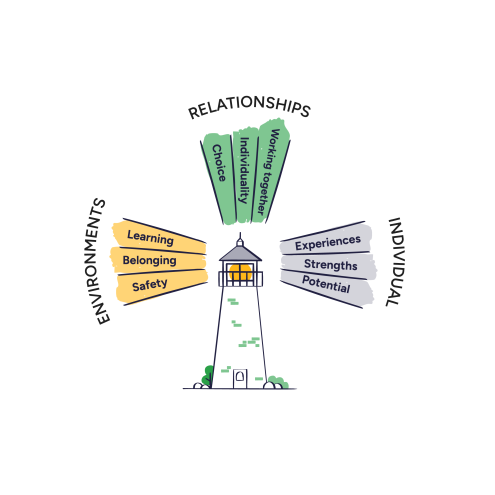
The Southdown Beacon is our organisation-wide framework for psychologically informed support. It helps staff create environments of safety, belonging, and learning; build relationships that value choice, individuality, and working together; and recognise each person’s experiences, strengths, and potential.
Working with families and others
People who know someone well can hold important knowledge about their history, communication, health, and preferences.
Where the person wants this, or where it is appropriate and lawful, we work with families, advocates, health professionals, social workers, and others involved in their life.
The person remains at the centre of planning and review. Information is shared in line with consent, capacity, privacy, and safeguarding responsibilities.
Martyn’s story
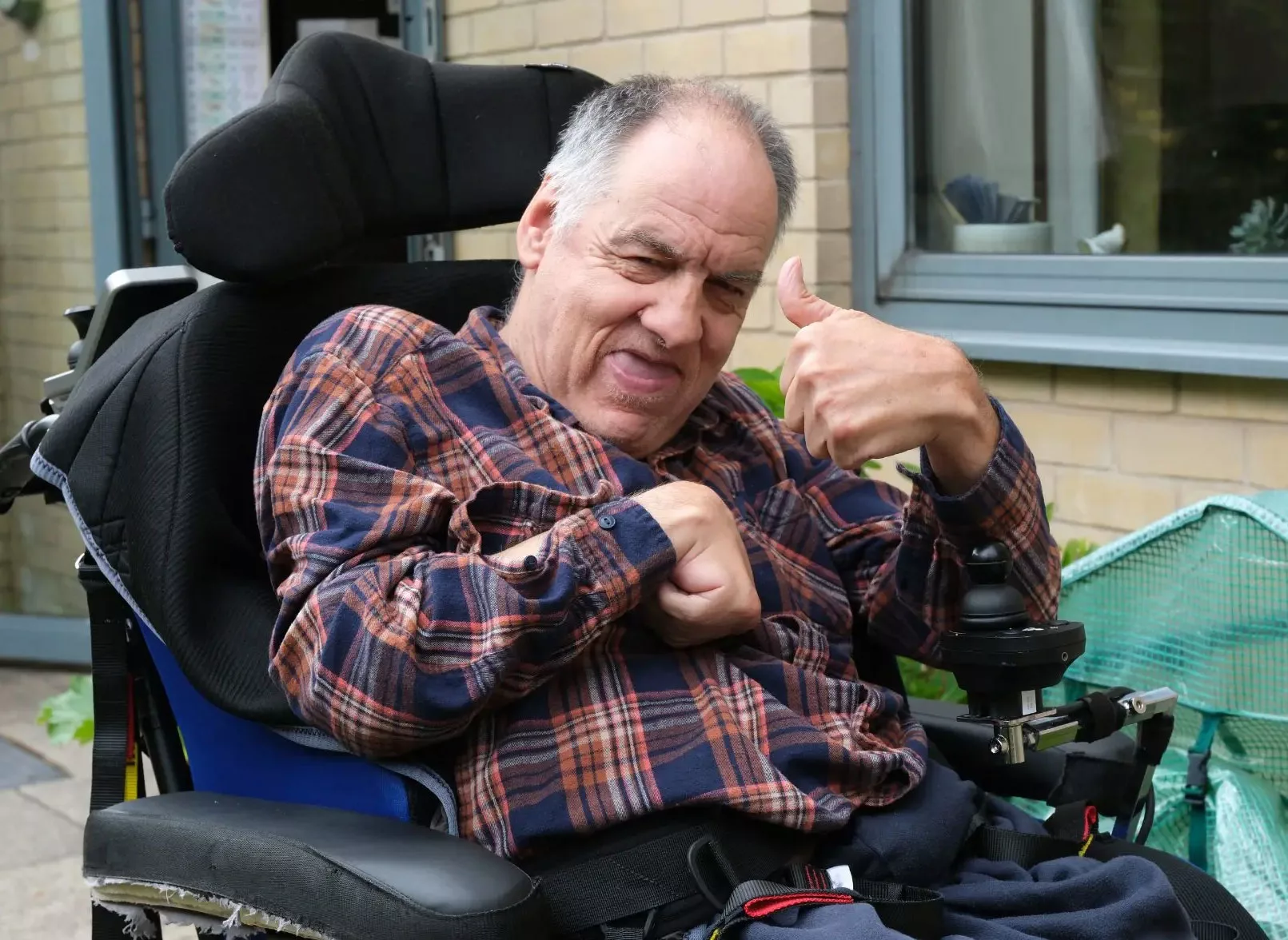
It’s great living here. I like that I can go out. I like to go all over the place — as far as possible. It’s exciting to see new things.
Martyn chooses where he goes on holiday, helps induct new staff, gives feedback, and opens staff team meetings.
His story shows how support can combine help with personal care and mobility with real choice, contribution, and involvement.
When specialist support is needed
For some people, behaviour may communicate distress, an unmet need, pain, or difficulty with the environment.
Positive behaviour support offers a more structured approach to understanding this and improving quality of life.
Looking for support?
Find out what services are available to you or someone you care about.
Explore more about us
Dive deeper into how we work, who leads us, and how we perform:
Housing support
Safe, secure homes and tailored support to help people sustain their tenancies and live well.
Find out moreMental health & employment
Person-centred support for over 160 people across Sussex to live with dignity and independence.
Find out moreHow we work
Our values, the Southdown Beacon, and how we involve clients and tenants in shaping our services.
Find out more